Radar OSS or Radar Cloud? An Honest Take on When to Use Each
The most common question in our GitHub issues: do I need Radar Cloud, or is OSS enough? Here's the honest answer, with the five questions that actually decide it.
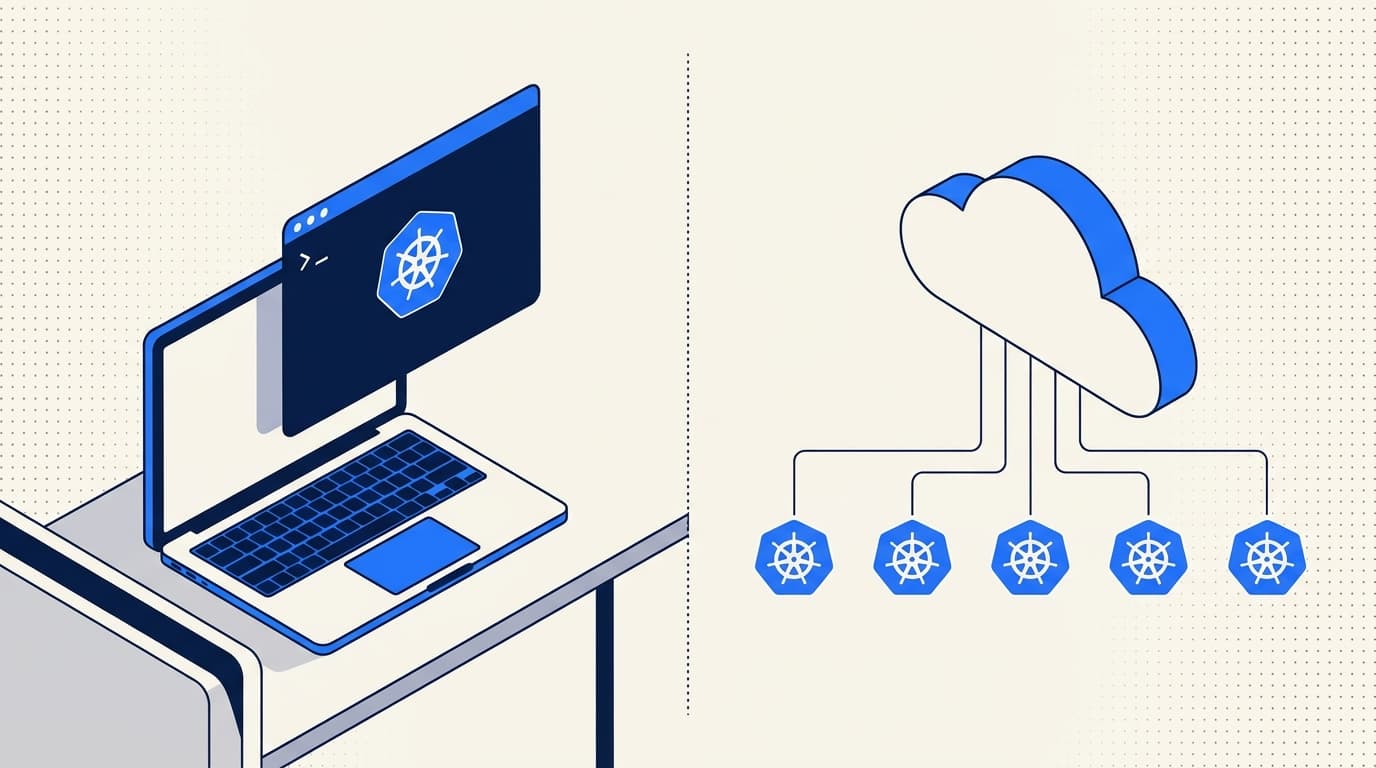
The most common question in our GitHub issues is some variant of "do I need the Cloud version?"
Here's the honest answer: most people don't.
Radar OSS launched in January. Radar Cloud launched a month later. Since then, we've watched people agonize over the choice in ways that don't match how we actually think about it internally. This post is our attempt to stop that agonizing.
What they share
Radar OSS and Radar Cloud are the same tool for most of what you do day to day. Same UI conventions, same keyboard shortcuts, same views: Resources, Topology, Timeline, Helm, GitOps, Traffic, Cluster audit, MCP. Same SharedInformer foundation under the hood. The React frontend is literally the same codebase, with fleet-scoped views layered on top for Cloud.
If you've used one, you already know the other. There is no relearning tax.
The thing that changes between them isn't the tool, it's the shape of your work. Are you one person poking at one cluster, or are you a team keeping an eye on many? That's the whole question.
The five questions that decide it
Forget feature matrices for a minute. These five questions predict the right answer better than anything else:
- Are you working alone, or with a team? If two or more engineers need to look at the same cluster state during the same incident, something hosted starts to earn its keep.
- Do you need shared, persistent identity? OSS auth is whatever your kubeconfig grants. If you want SSO, an audit log of who did what, and per-user RoleBindings managed centrally, that's Cloud.
- Do you want notifications when a cluster goes dark while nobody's looking? OSS is a tool you open. Cloud sends you a Slack or webhook ping when a cluster disconnects, a payment fails, or a teammate joins your org.
- Do you need more than one person to have scoped access? If "Alice can read prod, Bob can edit staging" matters, you want SSO-driven access mapped to standard K8s RBAC, not a pile of kubeconfigs.
- Are you running one cluster, or six? Fleet views only start paying for themselves once "which cluster is that pod in?" becomes a real question you ask weekly.
The more your answers trend toward team and multi-cluster, the more Cloud earns its place. If you're answering "alone, one cluster, I just want to look" to all five - stay on OSS. That's what it's for.
When Radar OSS is the right answer
OSS isn't a stepping stone. For a large slice of users, it's the final answer.
- Solo engineers debugging a single cluster from their laptop. You don't need a fleet view of one thing.
- Air-gapped or regulated environments where outbound traffic to a hosted vendor isn't allowed. OSS runs entirely on your machine with your kubeconfig. No data leaves.
- "I want to poke around for an hour" moments. You inherited a cluster and want to understand it before touching anything.
radarand you're in. No account, no token, no onboarding wizard. - Contributors and developers who want to read the source, fork it, or build on top of it. Apache 2.0, single Go binary, React UI embedded via
go:embed. - Teams deploying Radar in-cluster as a read-only internal dashboard via the Helm chart. If you're fine with shared view and your own OIDC or proxy auth in front of it, that works.
Where OSS is a bad fit: a 12-person team trying to coordinate during a production incident at 2am. Everyone running their own local Radar against their own kubeconfig is not incident response, it's a conference call. That's the point where you want one URL everyone shares.
When Cloud earns its price
Cloud starts making sense when your answers to the five questions flip.
- Teams of 3+ engineers who all need shared context. One URL, one cluster everyone sees through the same RBAC, one place changes are audited.
- Fleets of 5+ clusters. Fleet views exist because alt-tabbing between five browser tabs of Radar OSS is not a workflow.
- On-call rotations. Cloud notifies on the events the control plane actually owns - cluster disconnect and reconnect, billing, member invites - over Slack, webhook, or in-app. Conservative on purpose.
- Compliance-driven audit needs. If you need a record of every sign-in, scope change, and write operation - who did it, when, against which cluster - audit logs ship on Team (30-day retention) and Enterprise (365 days). Read clicks are not logged. SOC 2 Type 2 across the board.
- You're tired of kubeconfig-based access control. Cloud roles map to standard K8s RBAC via impersonation; Google and GitHub sign-in is on every plan including Free, and full SAML / OIDC SSO (Okta, Entra ID, Google Workspace, OneLogin, any spec-compliant provider) is on Enterprise.
Where Cloud is a bad fit: an engineer who will use Radar twice a week to check one cluster. There's no reason to pay for that. Use OSS.
The hybrid pattern
A lot of teams end up using both, and we think that's correct.
Local laptop debugging? OSS. You're on a train, you've got kubeconfig, you want to check why a pod is CrashLooping. radar is faster than opening a browser tab and loading a web app.
Shared fleet oversight, alerts, audit trails, on-call? Cloud.
Both have the same mental model. You don't flip between "oh, this is the OSS way of doing it" and "this is the Cloud way of doing it." It's one tool with two deployment shapes. Keep both. The OSS binary is free forever, and the Cloud Free tier covers three clusters for a small team.
What Cloud doesn't try to do
This is the part I want to be very clear about, because it's where trust in OSS tooling tends to break down.
Radar Cloud is not a replacement for Radar OSS. OSS stays Apache 2.0. OSS stays single-binary. OSS stays fully featured for single-cluster work. Resources, Topology, Timeline, Helm, GitOps, Traffic, Cluster audit, MCP - all of it stays in OSS. We are not gating features in OSS to push people toward Cloud.
Cloud adds things OSS can't meaningfully do on its own: multi-cluster aggregation, SSO mapped to standard K8s RBAC, an org-scoped audit log, hub-side notifications when a cluster disconnects, compliance attestations. Those are genuinely different surface areas, not artificially withheld capabilities. With Radar Cloud Self-Managed, you run the Cloud control plane on your own infrastructure.
We'll never rug-pull OSS. Specifically:
- We won't move existing OSS features into a Cloud-only tier.
- We won't add mandatory telemetry or cloud check-ins to the OSS binary.
- We won't require an account to run
radarlocally. - If we ever need to fundamentally change the license, it'll be a visible, discussed fork, not a quiet bait-and-switch shipped in a minor version bump.
We watched Lens do the mandatory-login dance in 2024. We're not doing that. It's why we open-sourced Radar in the first place.
A word about pricing
The Free tier of Radar Cloud exists precisely so a solo engineer at a small team can try the hosted version without pulling out a credit card. 3 clusters, unlimited nodes, unlimited teammates, Google and GitHub sign-in, the full product UX. If that's enough for you, stay there forever. We're fine with it.
Team is priced per cluster (see pricing) and carries 30-day audit retention, unlimited nodes, unlimited teammates, Google and GitHub sign-in, Slack and webhook notifications, K8s-native RBAC via impersonation, and shareable deep links. That's the tier most teams in the 3-50 engineer range land on.
Enterprise adds 365-day audit retention, SAML / OIDC SSO, SCIM 2.0 directory sync, a self-managed Cloud control plane, and US or EU data residency. A 99.9% SLA and a dedicated CSM come with a Custom annual contract.
We're not going to push you to a plan you don't need. The Free tier is a real product, not a 14-day trial dressed up.
The side-by-side
| Capability | Radar OSS | Cloud Free | Cloud Team | Cloud Enterprise |
|---|---|---|---|---|
| Clusters | Unlimited (local) | 3 included | Unlimited | Unlimited |
| Timeline | In-memory or SQLite (in-cluster) | 24 hours | 3 days | 30 days |
| Audit logs | - | - | 30 days | 365 days |
| Auth | kubeconfig | Google / GitHub | Google / GitHub | + SAML / OIDC SSO + SCIM |
| Notifications | - | Slack, webhook, in-app | Slack, webhook, in-app | Slack, webhook, in-app |
| RBAC | - | K8s impersonation, default roles | K8s impersonation, default roles | + custom ClusterRole bindings, per-user RoleBindings |
| SLA | - | - | - | - |
| Self-managed Cloud control plane | - | - | - | Yes |
| Fleet views | Single cluster | 3 clusters aggregate | All connected | All connected |
| Data residency | Your laptop | US | US | US, EU, or your infrastructure |
| Price | Free (Apache 2.0) | Free | Per cluster | Per cluster |
Current prices for each plan are on the pricing page.
A short decision flow
If you want the three-second version:
- One cluster, one person, ephemeral use? Radar OSS. Done.
- One cluster, small team, want a shared URL and Google or GitHub sign-in? Cloud Free.
- 2-50 clusters, team of 3+, want notifications and proper access control? Cloud Team.
- Need 365-day audit retention, SCIM, or a control plane on your own infrastructure? Cloud Enterprise, or Custom for a 99.9% SLA.
- Air-gapped, or allergic to hosted vendors? Radar OSS, deployed in-cluster via Helm.
- Already on OSS and it works? Stay there. Seriously.
The honest summary: if you're happy with Radar OSS, you don't need anything else from us. If you hit one of the walls above - multi-cluster, team coordination, retention, alerting, compliance - Cloud is the tool you should reach for, not because it's more powerful, but because it's shaped for that job.
Both tools are linked from radarhq.io. Pick the one that fits. We'd rather you use the right one than the expensive one.
Get the next issue in your inbox
Kubernetes deep-dives, new Radar releases, and what we learned shipping them.
About one email a month. No sales sequences. Unsubscribe anytime.
Keep reading
Radar v1.8: Applications, Rebuilt Navigation, and Helm Upgrade Tracking
Radar v1.8 adds an Applications view, rebuilt navigation and search, richer Helm operations, large-cluster performance improvements, and Prometheus over MCP.
What We're Building in 2026: Radar OSS and Radar Cloud
Two shipping dates, one product line. Radar OSS in January, Radar Cloud in February. Here's the scope, the split, and what won't make it into v1.
Radar on Cloud Native FM: Kubernetes as a Graph, and What Agents Change
Nadav Erell took Radar through a live broken cluster on Cloud Native FM. The short version: why a cluster is a graph, and what MCP actually changes.